
The question of what equipment a serious yoga practitioner actually needs is one that generates more confused and commercially motivated advice than almost any other topic in the wellness space. The yoga equipment market has expanded dramatically over the past decade, and Singapore’s premium retail and online channels now carry an enormous range of mats, props, apparel and accessories at price points ranging from accessible to eye-wateringly expensive. For practitioners who are serious about their yoga Singapore practice and who want to make intelligent purchasing decisions, the challenge is separating the equipment that genuinely improves practice outcomes from the merchandise that is primarily a vehicle for brand identity and wellness lifestyle signalling.
This analysis approaches the yoga equipment market from a practitioner-first perspective, examining what the physiological and pedagogical evidence suggests about which investments are worth making and what distinguishes genuinely premium products from expensively marketed mediocrity.
The Mat: Where the Investment Case Is Strongest
The yoga mat is the one equipment investment that every practitioner needs to make, and it is also the category where the quality differential between products is most meaningful in practice. The functions a yoga mat serves are several: providing cushioning for joint protection during floor-based work, creating the grip surface that allows practitioners to hold positions without slipping, providing thermal insulation from cold floors, and demarcating the practitioner’s personal space within a studio environment.
Budget mats, typically made from PVC foam, address these functions at a minimal level. They provide adequate cushioning, reasonable grip when dry, and acceptable durability for casual use. Where they fall short is in the variables that matter most to serious practitioners: grip degradation when wet with perspiration, material off-gassing that creates unpleasant odour particularly in heated classes, and durability under frequent use.
The premium mat market is dominated by several categories of material. Natural rubber mats provide the most consistent grip performance across dry and wet conditions and have excellent durability under frequent use. They are heavier than PVC foam mats, which is relevant for practitioners who carry their mat to studios, and they are contraindicated for practitioners with latex allergies. Cork surface mats offer a different grip mechanism: the cork surface becomes more grippy as it absorbs moisture, which is particularly valuable in heated practice formats where perspiration is significant.
In Singapore’s climate, where perspiration is a factor in almost any yoga class regardless of format, the wet-condition grip performance of a mat is more important than in cooler climates. This makes the natural rubber and cork categories more practically relevant for Singapore practitioners than they might be for practitioners in temperate climates, and it justifies the higher investment that these materials require.
For Singapore practitioners who attend heated classes regularly, a separate hot yoga towel that covers the mat surface is a worthwhile investment. Even a premium rubber mat can lose grip during heavy perspiration in a Bikram or hot vinyasa session. A high-quality microfibre hot yoga towel restores grip and allows the mat to be cleaned more easily after heated sessions.
Blocks: The Most Undervalued Prop in Serious Practice
Yoga blocks are among the most instructionally significant props in a studio practice, and they are also among the most commonly undervalued by practitioners who have absorbed the cultural messaging that block use represents a limitation rather than a tool. This messaging is pedagogically backwards. The practitioners who use blocks most skillfully are typically the more experienced and anatomically aware ones, who understand that blocks allow the skeleton to be placed in structurally optimal positions that enable the practice’s therapeutic effects to work as intended rather than being substituted by compensatory patterns.
The material and density of yoga blocks affects their practical utility significantly. Foam blocks are the most common and the most affordable. They are lightweight, easy to stack and adequate for the majority of block applications. Their limitation is compression: under significant body weight, foam blocks compress, which reduces the height they provide and creates instability in postures where the block is bearing substantial load.
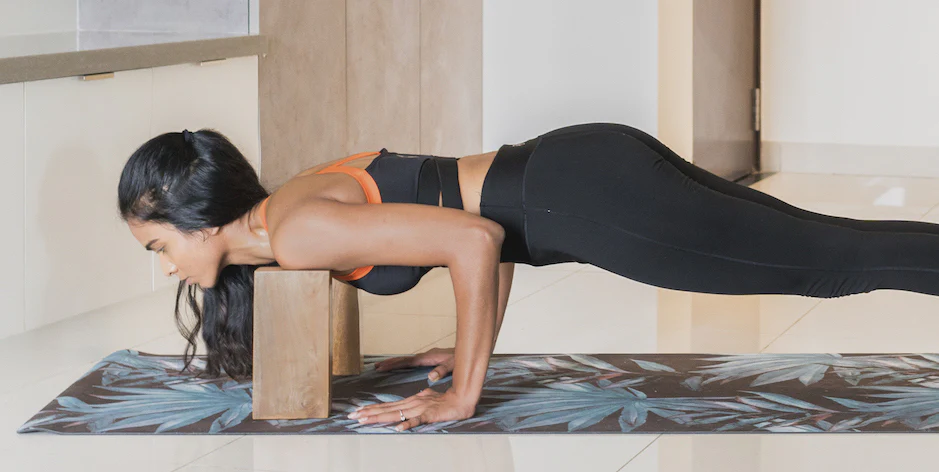
Cork and wood blocks do not compress under load, which makes them superior for weight-bearing applications such as arm balances, inversions and postures where the practitioner’s full bodyweight passes through the block. Cork blocks are lighter than wood, slightly more tactilely comfortable for the hands, and more resistant to moisture absorption. Wood blocks have the highest weight-bearing capacity and the longest durability but are heavy enough that carrying multiple blocks to a studio is impractical.
For practitioners investing in a home practice kit, one pair of cork blocks represents the best balance of performance, weight and durability. Studios typically provide foam blocks for class use, but practitioners with access to their own cork blocks in a studio that permits their use will find they improve the quality of their practice in specific postures.
Straps, Bolsters and Specialty Props
Yoga straps extend the practitioner’s reach, allowing the hands to connect with the feet or legs in postures where hamstring or shoulder tightness would otherwise prevent proper skeletal alignment. The pedagogical case for strap use is identical to that for blocks: using a strap to achieve correct skeletal position allows the practice’s intended effects to work properly. A practitioner who forces an unstrapped forward fold by rounding the spine is not practising forward folding; they are practising spinal rounding.
For Singapore practitioners who are building a home practice, a two-metre strap with a secure metal D-ring buckle is the most versatile option. The buckle must lock reliably under tension and must be easy to adjust with one hand during practice. Cheap plastic buckles that slip under load are a safety concern in any posture where the strap is bearing meaningful body weight.
Bolsters are the primary prop of restorative yoga practice, providing the volume and firmness needed to support the body in passive, long-held positions. A quality bolster is a meaningful investment: the filling material and cover fabric determine both the functional performance and the durability of the prop. Buckwheat-filled bolsters are the firmest and most supportive option. Cotton-filled bolsters are lighter and maintain their shape well. Kapok-filled bolsters compress over time and lose their supportive quality faster than either alternative.
Yoga Edition and Singapore’s quality studios consistently advise their serious students to invest in their own props as their practice develops, recognising that a practitioner who has quality personal equipment is more likely to maintain a home practice between studio sessions and is better equipped to get full value from the teacher’s instruction during class. The equipment investment, made thoughtfully and based on actual practice needs rather than marketing appeal, is one of the most tangible ways a serious practitioner can demonstrate commitment to the depth of their practice.